Posted on 02 July 2009 by urbangardencasual.com
By Vanessa Richins
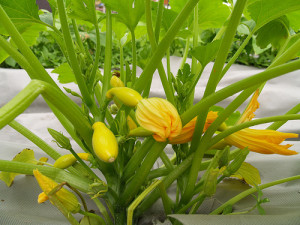
As I mentioned in my article about growing zucchini, you can sometimes end up with too many vegetables for your own family.
Other times, you could be in the mood for some homegrown beets, which you didn’t plant this year.
Enter Veggie Trader, a new website where you can buy, sell or trade your homegrown bounty with others in your own community.
As their website explains, the idea came from a neighborhood lemon tree that never seemed to be harvested. Concerned with the waste of healthy food, the creators sought to find a solution. Veggie Trader was born as a way to connect people within a community to make sure all could enjoy fresh produce.
First, register for a free account on their site. I’m AboutTreesShrubs on there.
Next, start searching for Read the rest of this entry »
Posted on 30 June 2009 by urbangardencasual.com
By Vanessa Richins
Anna:
“Hello, please could you tell me if there is a recommended height for raised beds , for wheel chair users , both children and adults? Thank you.”
Hi Anna! In doing my research, one resource I found was for the Dowling Community Garden. They have built raised beds meant to be accessed by both seniors and those in wheelchairs. They suggest that a suitable height for wheelchair users is 24″ high. You may want to lower it a few inches if the raised bed is meant for children in wheelchairs.
More tips come from a wonderful article by an intern at Oklahoma State University. She suggests making the beds 4′ wide if they will be accessed from either side, or making them just 2′ wide if the gardener will only be able to access one side.
The bed should be Read the rest of this entry »
Posted on 26 June 2009 by urbangardencasual.com
By Vanessa Richins
If I could afford it, I would just go to school for the rest of my life.
Well…I’m not so keen on tests and grades, but I enjoy learning new facts and exploring.
Did you know there are free classes you can take online that can help you become a better gardener?
Many universities are now allowing the general public access to some of their courses for free via the Internet. Here are some examples:
Biology 1 and Biology 2
UMass Boston offers these general biology classes at a college level. It’s a good way to better understand how the biological world around us functions.
Agricultural Science & Policy 1 and Agricultural Science & Policy 2
Tufts will help you learn about resource conservation and aspects of plant care such as nutrients, breeding, pests and production. There are outlines of the lectures, along with suggested readings, exams and quizzes. Image galleries are included for some crop pests.
Plant Diseases and Chemicals
USU has Read the rest of this entry »
Posted on 24 June 2009 by urbangardencasual.com
By Vanessa Richins
When I was little, I was fascinated by black-eyed peas.
I had never eaten them, but somehow decided that they were a plant I needed to grow.
Perhaps it was the fact that they looked like a little eye.
I bought packets of seeds yearly. I don’t think I ever harvested any, but I kept buying seeds.
Hopefully you’ll have better success with this Southern favorite - Vigna unguiculata, also known as Cowpeas. Did you know they come from Africa?
When you are choosing a Read the rest of this entry »
Posted on 20 June 2009 by urbangardencasual.com
By Vanessa Richins
If you’re a fan of salsa, you’re probably very familiar with cilantro.
If you also like to cook, you’re probably familiar with coriander.
Did you know, however, that these come from the same plant?
When you’re using the leaves of Coriandrum sativum, it’s called cilantro. If you let it flower and produce seeds, those are called coriander.
Cilantro prefers cooler weather. If you’re wanting to use the plant for cilantro, then plant outside in early spring or keep inside in the kitchen. When it’s warm, the plant will become bitter and go into seed production, so you could plant for coriander then.
Start the plants where you Read the rest of this entry »